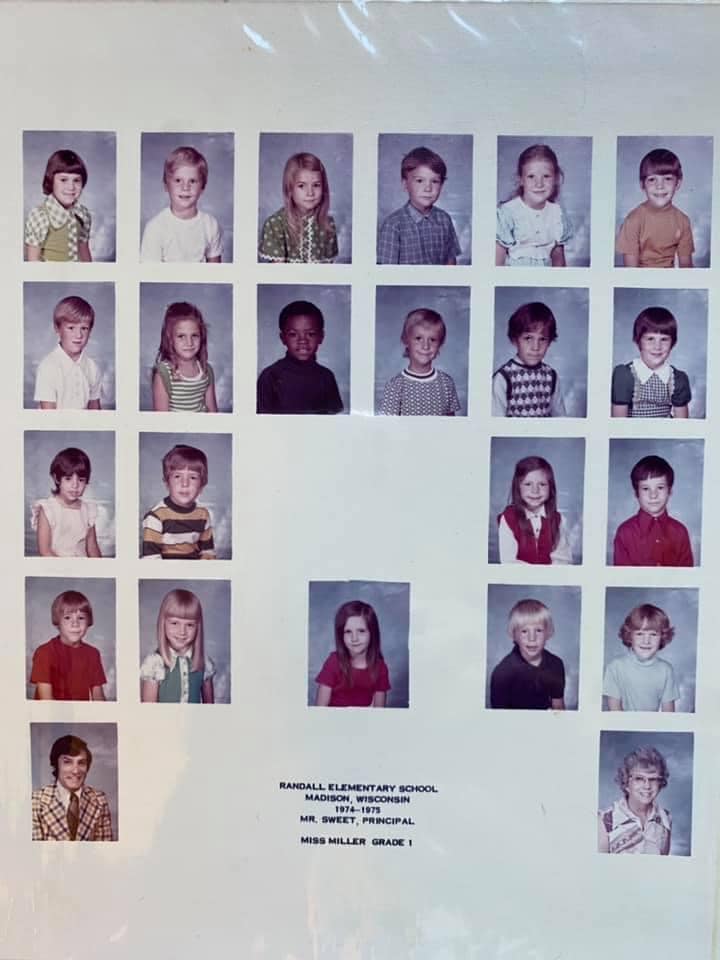

During a recent meeting, it was noted among my colleagues that we had relatively little minority representation. I had to agree and yet for a moment, I felt like an imposter. Since I grew up as a brown kid in the Midwest, it felt odd (and kind of nice) to be included in the mainstream. What does it mean to be a minority or a borderline minority - a “half-breed”, a Spock among Kirks? Below are observations from the point of view of an occasional minority.
Background
My father was born in a small town in Egypt just outside of Cairo called Nabaroh. My mother was born in Wisconsin and has blond hair and blue eyes. By color, I vary between light and semi-dark brown depending upon how much time I’ve spent in the sun. Although I have visited family in the Middle East a few times and spent a year living in Malaysia, culturally I am very “Midwest American”.
Growing Up
My elementary school had just a handful of black or brown kids and I included myself in the brown category despite my best efforts to fit in. My friend Kevin was the only black kid in the entire school.
Spending an afternoon splashing around in a swimming pool or at the beach usually resulted in surprised remarks at the end of the day (from kids and adults) along the lines of “Gosh, you sure are brown!” or “I didn’t realize that you were so brown!”. As a Boy Scout, we met in a Christian church and spent time studying the Boy Scout Handbook which (at the time) never included people who looked like me.
My best friend growing up was my neighbor, Pat. When we were in high school, we took a trip to Europe together with our high school class. Afterwards, we visited his grandmother together to show photos from the trip:
Grandmother: Look at that guy standing next to you in line for the plane. He looks like one of them A-Rab terrorists.
Pat: Grandma, that’s Abe!
Politics
Throughout my life, my government has almost continually been at war with people who look like me.
When I was a kid, I visited Egypt and Saudi Arabia during the midst of the oil embargo, soon after the Iran hostage crisis. People were kind. When talk did turn to politics, people were clear that their quarrels with the US government had nothing to do with the people. I don’t think I’ve met anyone who felt more of a bond with American holidays than my Egyptian father. And yet, as lifelong American citizen and resident, when reading the news or listening to people talk, I still sometimes feel like I’m the enemy.
In my career, I’ve worked on a number of DoD projects. The scenarios that they depict and the war games that they play almost always are set in environments that look just like places where I remember visiting family. The bad guys almost always look like me.
The Media
Studies have shown that in American films, almost 95% of the depictions are negative or terrorism related (Reel Bad Arabs). Some minorities are quietly shunned or hated but perhaps no other group is so openly despised and vilified.
When visiting the Middle East, I found that an almost universal love for American cinema and culture which was surprising considering the way Middle Eastern people are depicted. It seems better now than in the past, but it still gets tiresome to always be depicted as the enemy.
Dating
As an occasional minority, dating can sometimes result in (more than normal) confusion. In college, my first “serious” girlfriend was from Minnesota. At one point, her parents came to Madison to visit:
Girlfriend: I’m worried. What will people think about our mixed relationship?
Me: Um, what do you mean?
Girlfriend: You know, our mixed relationship.
Me: Our what?
Girlfriend: Mixed. Relationship.
Me: Um, what? You mean boy-girl?
Girlfriend: (in exasperation) Seriously?
On another occasion, I was visiting a former girlfriend in North Carolina. When going out, I was instructed that as a brown person, it might be prudent not to be too physically close in public or to otherwise draw attention to ourselves. This sort of thing was well meaning and not at all intended to be hurtful, but it still stung.
Small Towns
Interacting with people from small towns can occasionally result in awkward moments. For example, when opening an account from the Bank of Cross Plains:
Bank official: Do you have some ID?
Me: Here’s my (blue United States) passport.
Bank official: (looking at stamps from Malaysia). I see you’ve been home recently. Where are you from?
Me: I’m from Madison.
Bank official: I meant originally.
Me: Madison.
Bank official: I mean where were you born?
Me: Madison.
Interactions with Police
When I was in my 20s, I helped out making student movies with my film student friends. A group of 5 or 6 us were on our way to Devil's lake in a car that had a camera mounted on the exterior. We were pulled over by a police car and all got out. The two women officers in the police car pulled over behind us on the busy highway and started shouting orders at us from beside their car. Since it was impossible to hear, I took a half step closer to ask if they could repeat what they said. They went into a crouch with their hands on their guns screaming at me. I was completely flustered and put my hands up. I think I got down on my knees (it’s difficult to think straight in that situation). Things de-escalated.
The officers said that they were responding to a report of someone being kidnapped and that was the reason for the suspicion. Still, there were 5 or 6 of us in the car and I was the only one who was singled out. I’ll never know the point of view of the officers, but at the time, it sure felt as though it was based at least partially upon appearance.
The Little Things
Sometimes there are little things that go along with being a large brown person. Once in a while people move away from me when I sit down on a bus. Sometimes at night, women cross to the other side of the street when seeing me. I want to say “I’m nice, really.” When filling out forms, there is almost always a box labelled “ethnicity” and I never quite know which box to check. When I pick a box, it never seems right. These are little minor reminders of my outward appearance.
Benefits and Conclusions
One of the benefits of being ethnically ambiguous is that I can be a bit of a chameleon and fit in to some degree almost anywhere. When visiting other countries, people often think that I am whatever they are. I’ve been able to “pass” for a wide variety of ethnicities in different places. Being vaguely “ethnic” is sort of like having a special kind of passport. Despite the difficulties, I’ve come to accept and like that aspect of my identity.
I’ve grown to like being an occasional minority.